

Notary Public Underwriters Blog
Evaluating Documents for Notarization
- Details
- Published: January 26, 2026
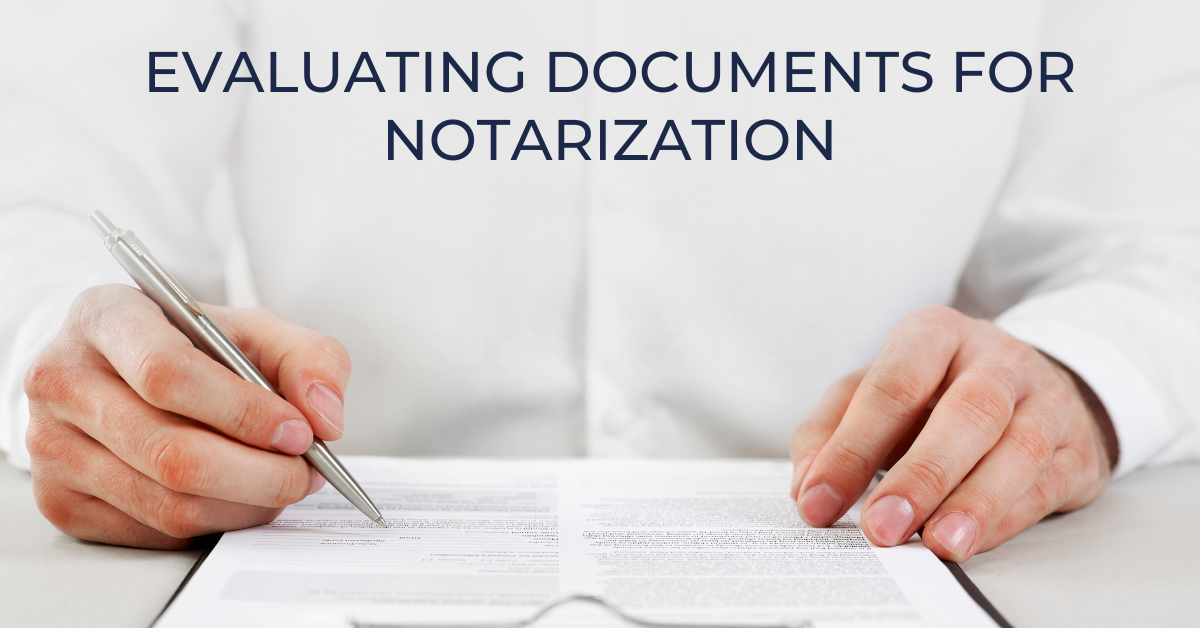
A good notary knows that notarizing a document is never just a matter of "sign and stamp."
Before even touching a notary stamp or seal, experienced notaries make sure they can perform the requested notarization in full compliance with their state laws and administrative rules. Most begin by carefully examining the document that required one or more signatures to be notarized.
Some items on a notary's checklist are obvious because they are part of the basics of notarial law or administrative rules everywhere in the U.S. For example, a notary will check:
- Is the notarial act specified in the document’s notarial certificate one that the notary is allowed to perform under their state law or administrative rules?
- Does the wording of the document’s notarial certificate substantially (or exactly) comply with the certificate forms required by the notary’s state laws or administrative rules?
- Of the people who are present to have their signature notarized, are they each named in the document as signers, and are they personally known to the notary or can they produce satisfactory evidence of identification under the notary’s state law or administrative rules?
- If signatures must be made only in the notary’s presence (required for verifications on oath or affirmation and signature witnessing notarial acts), are there any pre-signed signatures that the named signer should cross-out and resign at the time of actual notarization?
- Are there any pre-inserted dates for signatures that do not align with the requirements of the specified notarial act(s)? (Remember, for an acknowledgment a signature to be notarized may be made and dated before or during notarization. For a signature witnessing or verification on oath/affirmation, the signature to be notarized must be made in the officiating notary’s presence and dated with that date. Notarized signatures may never be dated after the notarial act was performed.)
- Having examined the document, is the notary able to make a reasonable description of it in the notary’s journal (record book) entry?
Reviewing a document is a simple fundamental to complete, and it delivers significant value to the officiating notary. It familiarizes the notary with the requirements of the notarial act to be performed and focuses the notary on the performance of the notarization. It also helps the notary to accurately describe the document and notarial act(s) in the notary's journal (record book). Most importantly, it's a good reminder that notarizing a signature is never just a "sign-and-stamp" task. It's a complete ceremony that the notary must execute from beginning to end with care and professionalism.
Related Article(s)
How to Navigate Notarial Certificates and Documents
How Do I Keep My Current and Filled Journals (Record Books) Secure?
Customer Expectations Versus Notarization Requirements
Fighting Fraud: Why Notaries Should Avoid Using Signature Stamps
Tips to Protect Your Notary Stamp and Journal
How to Get More Notary Business Part 1: Optimize Your Marketing
How to Avoid Common Mistakes During a Notarization
When Can a Notary Use Personal Knowledge to Identify a Signer?
Does a Notary Need to See the Entire Document When Notarizing?
Can a Notary Correct a Mistake on the Notarial Certificate?
Notary FAQs: Essential Answers for Everyday Scenarios
Top Ten Mistakes That Notaries Make
Can a Notary Notarize a Family Member's Signature?