

Notary Public Underwriters Blog
Documents You Notarize Can Become Historical Items
- Details
- Published: April 13, 2026

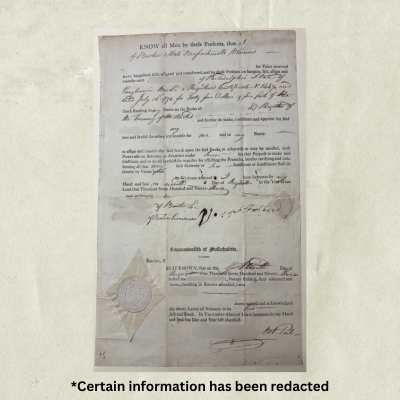
Notary Public Underwriters staff members recently enjoyed an interesting treat: viewing original documents signed in the presence of a Notary Public and reaching back as far as 233 years. The documents are held as part of a collection preserved and kept for the past few decades by the non-profit Notary Publick Historical Society (yes that spelling of “Publick” is intentional).
Within the Historical Society’s collection are several beautifully handwritten and signed documents. Many of the older documents’ signatures were made with the primary writing tool of that time—just a bird’s quill pen dipped in an ink well.
Today, while most of us still handwrite daily with an ink pen, the majority of our written words are produced through an electronic device’s keyboard. We can even “write” by simply speaking while AI-assisted processes create words on our device screens.
Signatures no longer have to be hand-scrawled… we can create legal electronic signatures using an electronic sound, symbol or process. It can be as simple as typing your name on the signature line of an electronic document, as allowed under U.S. law and individual U.S. state statutes.
But back to that historical document collection. It shows that “when it’s not broken, don’t fix it,” and that unbroken thing happens to be the act of notarization.
Consistently, documents in NPHS’s historical collection that were signed before a Notary Public display three elements that, centuries later, still appear in notarized documents today:
- notarial certificate wording indicating that the Notary performed a notarial act;
- the Notary’s signature; and
- the Notary’s official seal of office.
Think about that… the notarial acts you perform now still clearly reflect the form and function of notarial acts performed centuries ago. To this day, the facts preserved in each notarial act found in NPHS’ historical document collection are still credible evidence of the signer’s intent and decision to sign.
Never forget that your notarial acts matter, and that your notarial certificates can live for years, decades, and even centuries in the documents containing them. Therefore, it’s your solemn duty to notarize expertly, every time.
Notary Public Underwriters helps you fulfill your duties of office by providing information on notary law changes… website articles describing notarization situations, notary commission responsibilities and developments affecting those responsibilities… as well as skilled, state-specific help-desk support from our friendly Customer Care team members.
Contact us today for all your Notary Public needs!
Related Article(s)
Test Your Notary Knowledge: Take Our Notary Quiz!
Customer Expectations Versus Notarization Requirements
Fighting Fraud: Why Notaries Should Avoid Using Signature Stamps
Tips to Protect Your Notary Stamp and Journal
How to Get More Notary Business Part 1: Optimize Your Marketing
How to Avoid Common Mistakes During a Notarization
When Can a Notary Use Personal Knowledge to Identify a Signer?
Does a Notary Need to See the Entire Document When Notarizing?
Can a Notary Correct a Mistake on the Notarial Certificate?
Notary FAQs: Essential Answers for Everyday Scenarios
Top Ten Mistakes That Notaries Make
Can a Notary Notarize a Family Member's Signature?